A generation ago, a great object spoke for itself. Today the most discerning collectors ask a second question before the first is even answered: where has it been? Provenance — the documented chain of ownership that follows a piece through time — has quietly become the defining luxury of the field.
The reasons are practical as much as romantic. A clear history protects against forgery, clarifies legal title, and underwrites value when a piece changes hands again. But it is also something subtler: the assurance that you are not merely the owner of an object, but the temporary custodian of a story.
The paper trail is the object
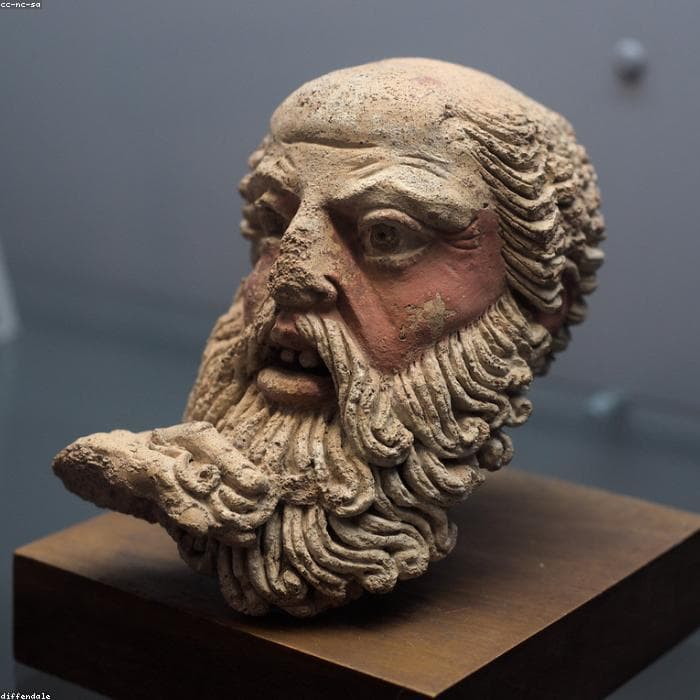
We have come to treat the dossier — the certificates, the records of past sales, the correspondence — as inseparable from the lot itself. A Roman portrait without its history is a beautiful unknown. The same portrait with a documented line back to a distinguished mid-century collection is something else entirely: legible, defensible, and considerably more liquid.
This is the quiet inversion of the last decade. The market once prized the immaculate surface above all else; today it prizes the object whose past can be read. Condition still matters, but a flawless piece with no history now trails a well-documented one when both come to sale — often by a wide margin.
From flawless to trustworthy
Trust, not perfection, is the currency that now defines value at the highest level. A collector buying seriously is underwriting a future sale they cannot yet see, to a buyer they will never meet. What survives that transfer is not the gloss of the object but the strength of its record.
The market no longer rewards the flawless object. It rewards the object you can trust.
Provenance and liquidity
There is a financial dimension to all this, and it is worth naming plainly. A documented object is a liquid one. When the time comes to sell, a clear history widens the pool of buyers, shortens the diligence that stands between interest and offer, and lets a piece move at something close to its true worth rather than at the discount uncertainty always exacts.
The reverse is equally true. An undocumented piece, however fine, asks each prospective buyer to take on the cost and risk of establishing what should already be known. Most decline; those who proceed do so only at a price that compensates them for the doubt. Provenance, in this light, is not sentiment but the most practical form of value protection a collector can buy.
What a documented history protects
A complete provenance does three things at once. It guards against forgery, because a continuous record is far harder to fabricate than a single convincing surface. It clarifies legal title, establishing that a piece was lawfully acquired and may be lawfully sold and exported. And it protects value, giving the next custodian the very confidence you required before you bought.
Where the record is thin, the risk is real — and the discount is steep. A gap of a few decades, an unnamed "private collection", a sale with no catalogue: each is a question the market will eventually ask, and answer in the price.
It protects you legally as much as financially. For antiquities especially, a history that predates the modern conventions on export and acquisition is not a nicety but a precondition of being able to own and resell a piece at all. The dossier is, in the most literal sense, the difference between an asset and a liability.
How to read a provenance
Read a chain of ownership the way you would read a balance sheet — looking first for what is missing. Named collections, dated sales, exhibition history and published references are the entries that carry weight. Continuity matters more than glamour: an unbroken line through modest hands is worth more than a celebrated name with a decade unaccounted for.
The strongest dossiers also anchor the object to the literature — a catalogue raisonné, an auction record, a museum loan. Each independent reference is another point at which the story can be checked, and trust, in the end, is only ever the sum of what can be verified.
Learn, too, to read what a history does not say. A confident attribution with no supporting paper, a provenance that begins suspiciously late, a famous name invoked without a document to fix it — these are the soft spots a careful buyer presses. The point is not suspicion for its own sake, but the habit of asking of every claim how, exactly, we know it to be so.
The collector as custodian
That is the standard we hold every lot to before it enters the catalogue. Not because it is fashionable, but because it is the only basis on which a serious collection can be built — and one day, passed on.
To collect this way is to accept a longer horizon. You are not the destination of an object but a chapter in its history, charged with keeping the record intact for whoever comes next. Do that well and the provenance you protect becomes, in time, part of the very value you set out to preserve.
Share